

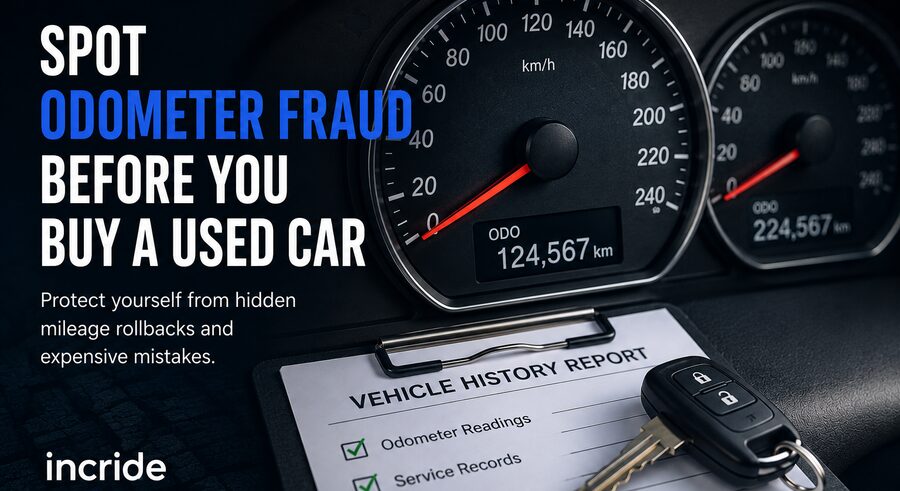
Odometer fraud is not a rare, edge-case risk. German police estimate that roughly one in three used cars sold has had its mileage rolled back at some point, causing an estimated €6 billion a year in damage across the used car market. Since 2005, manipulating an odometer has been a criminal offense in Germany, punishable by up to a year in prison, and a 2017 EU regulation pushed manufacturers toward better technical protections. None of that has made the practice go away. Here's how to actually check before you buy.
A single number on the dashboard tells you nothing on its own. What matters is whether that number is consistent with everything else the car's history should show:
Modern cars log mileage inside stored fault codes and service-interval data, not just on the dashboard display. A workshop can read this out in a few minutes. The mileage recorded in those logs should never be higher than what the odometer currently shows, if it is, that's a very hard sign to explain away.
Wear is imprecise on its own, but it's a useful sanity check. Steering wheel, pedal rubber, the driver's seat bolster, and the key fob should all show wear roughly consistent with the stated mileage. A "low mileage" car with a heavily worn steering wheel and a sagging driver's seat is worth a second look.
Insist the purchase contract states the "actual mileage" (tatsächlicher Kilometerstand) rather than a hedge like "according to odometer" (laut Tacho). That distinction matters if the mileage later turns out to be false, since a vague hedge gives the seller more room to say they never actually claimed a specific number.
For anything you're not fully comfortable assessing yourself, a professional pre-purchase inspection (through ADAC or a similar service) is a small cost relative to the price of the car, and relative to what a rolled-back odometer would actually cost you.
Everything above is about verifying someone else's car after the fact, which is always harder than it should be. If you're the one who'll be selling a car down the line, the easiest way to avoid ever being on the other side of this conversation is to build a running, dated record of every fill-up as you go, rather than trying to reconstruct one years later from a shoebox of receipts.
That's what INC Ride's Fuel History tool does: photograph each gas station receipt as you go, and it builds a verifiable, dated usage history for your car automatically. When it's time to sell, you hand a buyer proof instead of just a number on a dashboard.